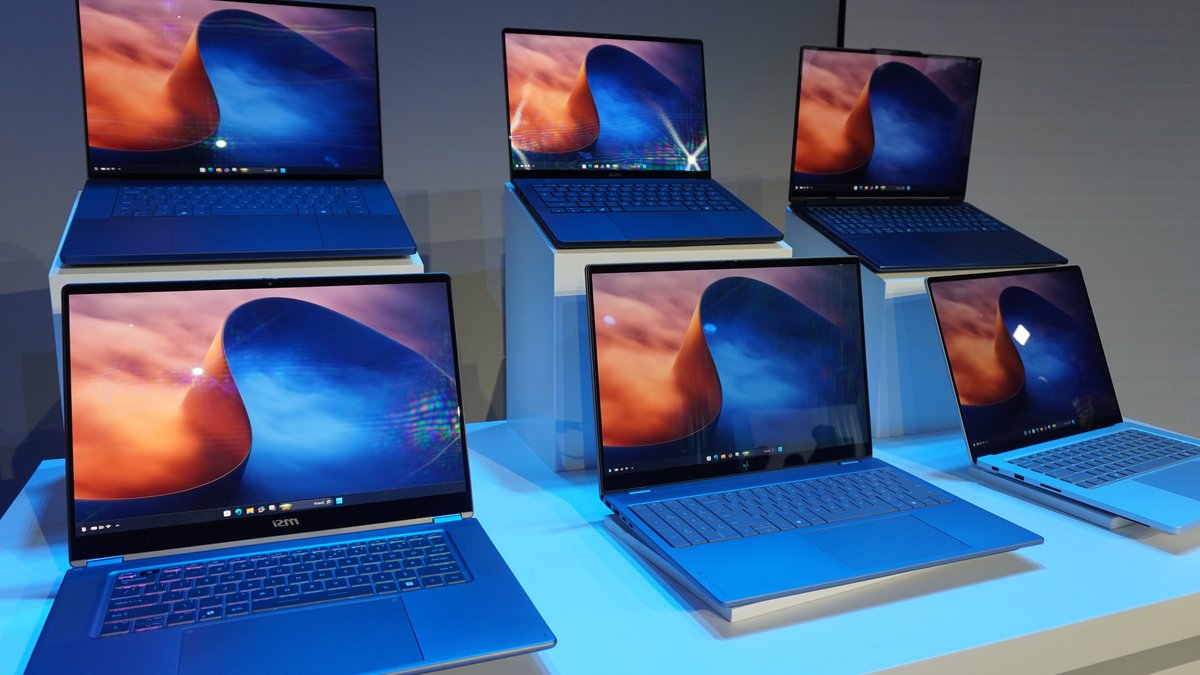
Microsoft and Nvidia unveiled new AI-focused PCs this week, marking a significant shift in the company’s approach to artificial intelligence hardware. These machines, built around Nvidia’s RTX Spark platform, promise substantial computing power but come with a steep price tag that may limit their appeal beyond niche developers. The launch represents Microsoft’s second major attempt to establish a distinct AI PC category, following the lukewarm reception of its Copilot+ PC brand.
A Rebirth of Microsoft’s AI PC Strategy
The new Surface Laptop Ultra and partner devices from Dell, HP and others are designed for users who need to run large language models locally rather than relying on cloud-based services. This approach aims to reduce ongoing costs associated with AI token usage from providers like OpenAI and Anthropic. However, the extreme pricing raises questions about mainstream viability.
At the launch event, Microsoft positioned these devices as AI PC 2.0, significantly more powerful than the original Copilot+ PCs introduced in May 2024. The RTX Spark machines deliver up to 1 petaflop of AI performance, roughly 25 times more than their predecessors. Despite this leap in capability, the devices show ongoing challenges in Microsoft’s AI hardware strategy.
The Copilot+ PC brand, originally marketed as a premium Windows 11 category requiring at least 16GB of memory and an NPU capable of 40 trillion operations per second, failed to gain consumer traction. A key feature called Recall—marketed as a “photographic memory” for PCs—was plagued by privacy concerns and ultimately scrapped from marketing materials. Security expert Kevin Beaumont had warned that the feature’s implementation could damage the entire Copilot brand.
The NPU’s Limited Role and Market Realities
Internal testing reveals the neural processing unit (NPU) on most Copilot+ PCs sits largely idle. Monitoring tools show that AI workloads predominantly rely on the GPU rather than the dedicated NPU. This suggests the NPU, long promoted as the centerpiece of local AI computing, may not be the primary driver of performance.
Read Also: Hisense U8 tops color tests, offers steep Prime Day discount
The new RTX Spark devices address this by using unified memory architecture, allowing the CPU and GPU to share resources more effectively. This design enables capabilities that standard Copilot+ PCs cannot match. However, the high cost and focus on developer needs rather than everyday productivity features limit broad appeal.
Microsoft’s partners have largely distanced themselves from the Copilot+ branding. Dell and HP’s recent product announcements made no mention of the label, signaling a strategic retreat. Consumer sentiment toward AI remains cautious, with 52% of U.S. respondents in a Pew survey expressing more concern than excitement about artificial intelligence.
The Path Forward
Tech analysts observing Microsoft’s strategy note that the Surface Laptop Ultra targets developers who might otherwise opt for a MacBook Pro. However, the goal is enabling devices to run local models currently requiring high-end configurations. The source highlights that even a base Mac Mini can outperform Copilot+ PCs in AI tasks, showing the urgency for Microsoft’s partners to act.
Market Realities and Waiting Game
The source points out that AI PC 1.0 lacked sufficient power, while AI PC 2.0’s expense restricts it to niche users. Consumer sentiment, as reflected in a Pew survey cited earlier, remains cautious, complicating Microsoft’s branding efforts. Partner manufacturers like Dell and HP have distanced themselves from the Copilot+ label, signaling strategic retreat. The source attributes this to the brand’s failure to resonate with everyday users, whose needs differ from power users.
Global memory and storage shortages, driving PC prices higher, further hinder adoption. The timeline for future developments remains uncertain. Its success hinges on balancing affordability with the technical capabilities required for local AI workloads. Without these shifts, Microsoft risks continued stagnation in the AI PC market.


