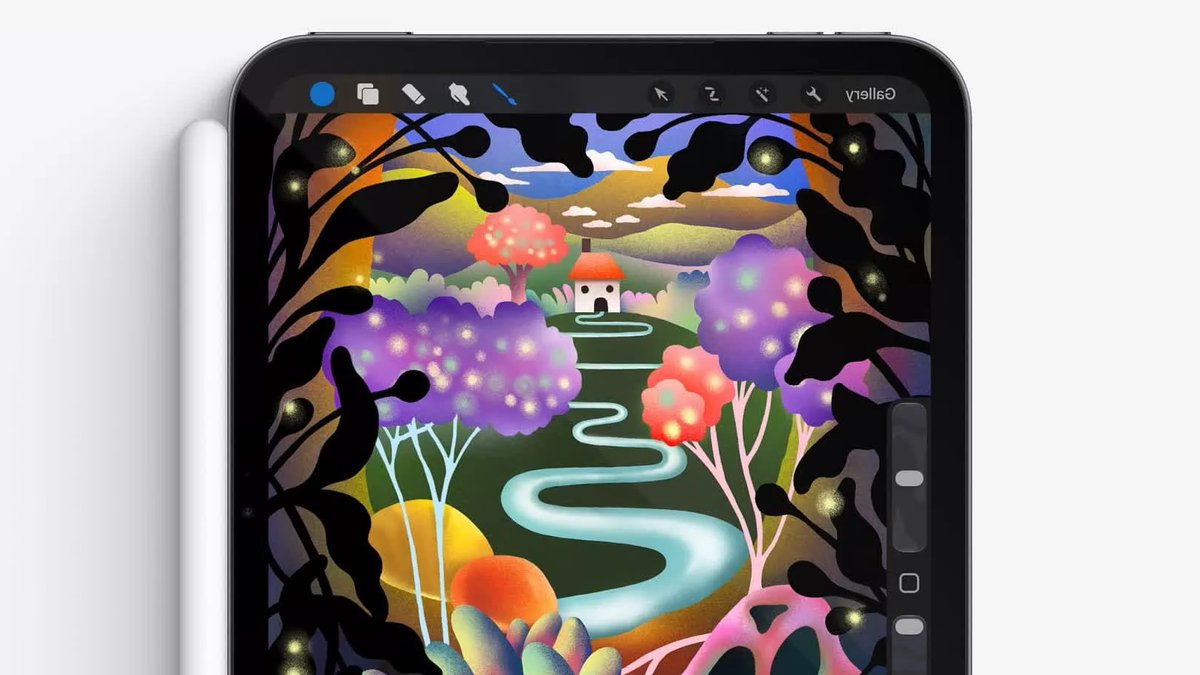
Apple’s 2026 iPad lineup introduces a lineup that has left buyers with more questions than answers, as price hikes, inconsistent performance tiers, and shifting priorities create confusion over which model suits different needs. The new iPad mini now features the A20 Pro chip and an OLED display, while the iPad Air continues to use an LCD panel—despite its price sometimes undercutting that of the mini. At the same time, the entry-level iPad has climbed to $449, and the Pro now competes directly with MacBooks in cost. For the first time in years, no single model stands out as the clear best choice for all users.
The base iPad remains the most budget-friendly option, but its LCD display lacks anti-reflective properties, making it less practical for outdoor use. Its A16 chip and 6GB of RAM also exclude it from running Apple Intelligence, which requires on-device processing power. Still, it supports the Magic Keyboard Folio—a $349 accessory that transforms it into a portable laptop alternative, though its kickstand design is bulkier than a MacBook’s.
For $399, the 128GB Wi-Fi version of the base iPad includes a 12MP front camera and the same 2360 x 1640 resolution as the Air, along with 500-nit brightness. Storage upgrades follow a predictable tiered structure: 256GB adds $100, while 512GB costs another $200. Color options include silver, blue, pink, and yellow.
iPad mini’s surprising power leap
The iPad mini has received the most significant upgrade, adopting the A20 Pro chip from the upcoming iPhone 18 Pro and 12GB of RAM. It outperforms the Air’s M4 chip in single-core and graphics performance, making it a compelling choice for mobile gaming or 3D modeling. However, only the 512GB model unlocks the full chip configuration—lower storage tiers disable one performance core and the neural engine. The mini’s 8.5-inch OLED display delivers 1,200 nits of peak brightness and true blacks, while its acoustic display eliminates speaker grilles for an IP67 water-resistant design.
At $699 for the base 128GB model, the mini is the smallest iPad most adults can comfortably hold, though its edge-placed front camera complicates one-handed use. It supports the Pencil Pro and 35W fast charging, though the included adapter only provides 20W. The optional nano-texture display, which reduces glare, is available on higher-tier models for an extra $100. Only two colors are offered: midnight and starlight.
The iPad Air remains the most balanced option, combining the M4 chip, a scaled-down version of Apple’s latest processor, with 12GB of RAM and an 11-inch LCD display. It excels in multitasking and video editing, though its screen isn’t ideal for HDR work. The 13-inch version, priced at $849, offers 600-nit brightness, a 4:3 aspect ratio for reduced scrolling, and improved audio. Storage upgrades follow the same tiered pricing as the base iPad, with 1TB available for $300 more, a significantly better value than the Pro’s $400 jump to the same capacity.
Air’s balanced act for pros
This model supports both the Magic Keyboard and Pencil Pro, making it versatile for professionals who don’t require the Pro’s LiDAR scanner or 120Hz display. Its color options, starlight, space gray, blue, and purple, are more varied.
The iPad Pro is designed for professionals who demand top performance. Graphic artists will appreciate the smooth experience of drawing on a 120Hz display. For interior designers who need to show clients room layouts in real time, the built-in LiDAR can be genuinely useful. Video editors who work on the go may find the Pro to be the device of their dreams.
Its tandem OLED display uses two stacked panels to achieve up to 1,600 nits of peak HDR brightness, with 1,000 nits sustained brightness. The 13-inch model adds a mini-LED backlight, delivering deeper blacks and higher contrast than the 11-inch’s standard OLED. Both sizes support P3 wide color gamut, but only the 13-inch Pro includes a True Tone display for automatic white balancing, reducing eye strain during extended use.
Pro’s creative toolkit and laptop rival
For power users, the iPad Pro’s USB4/Thunderbolt 3 port enables external GPU acceleration, making it the only iPad capable of running demanding creative software like Adobe Photoshop or Final Cut Pro at near-MacBook speeds. The Magic Keyboard for iPad Pro includes a haptic trackpad and function keys, closely mimicking a laptop experience, though its $349 price matches the base iPad’s keyboard folio, which lacks those refinements.
The iPad Air’s 13-inch variant stands out as the best value for productivity, offering a 4:3 aspect ratio that reduces horizontal scrolling and improves note-taking workflows. Its 600-nit brightness surpasses the 11-inch Air’s 500 nits, though it still trails the Pro’s 1,000-nit sustained HDR. The M4 chip’s three performance cores handle multitasking efficiently, but its LCD panel lacks the Pro’s mini-LED precision, making it less suitable for color-critical work.


