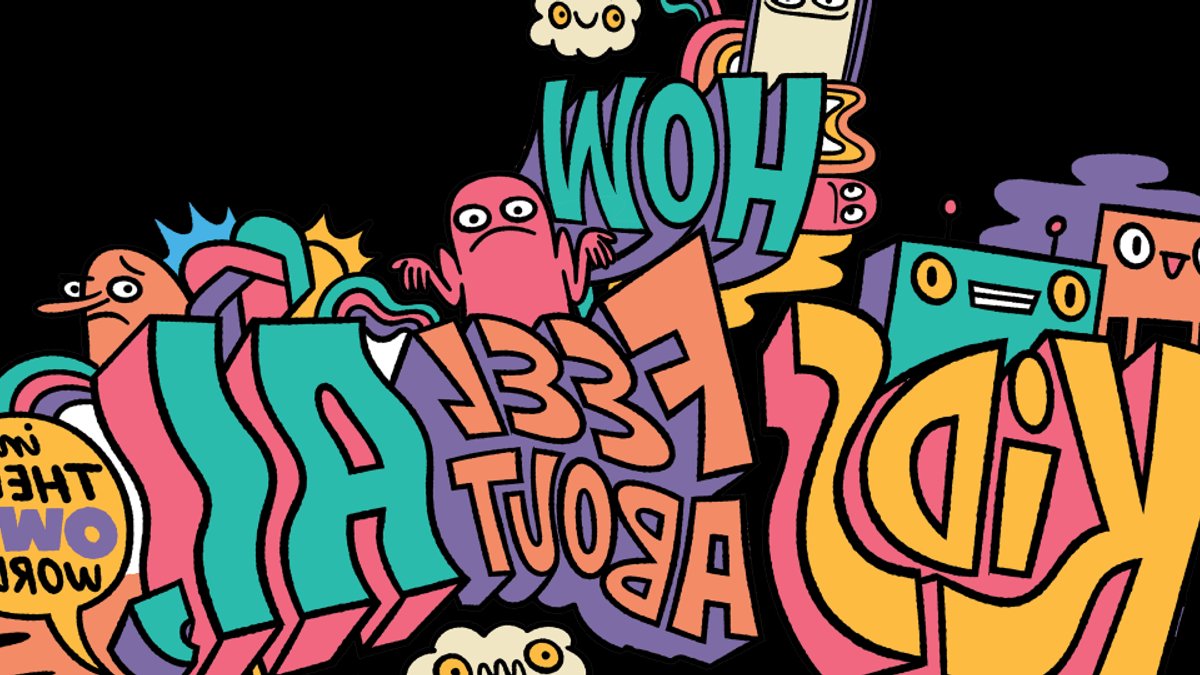
Children often surprise adults when asked about artificial intelligence. A project by the editors of Anyway, an independent print magazine for tweens and teens, revealed that many young people don’t share the same urgency or enthusiasm about AI as older generations.
The editors, Jen Swetzoff and Keeley McNamara, expected concerns about cheating, deepfakes, or job displacement. Instead, they found indifference, skepticism, and resistance. Some kids refused to discuss AI, while others raised unexpected issues—like its environmental impact or how it might reduce creativity and critical thinking.
Young people aren’t demanding AI tools. “They aren’t asking for it,” the editors said. Many see it as something adults are promoting, not a technology they want. Some view it as a threat to their future, though not always in predictable ways.
One finding stood out: kids may grasp AI’s limitations better than adults. They’re less impressed by its abilities and more aware of its flaws—bias, unreliability, or how it can replace human work without real benefit. Swetzoff and McNamara noted that young people often set clearer boundaries about when they’d use AI.
Related: Scientists Create Female Clones of Male Mice
Not all kids reject it. A few described using AI for schoolwork or creative experiments, but even then, they remained cautious. A 14-year-old said they’d only use it for “boring tasks,” like summarizing articles, but never for writing or art—work they considered inherently human.
In another field, researchers in Japan have achieved a biological milestone: creating female clones from male mice. The team, led by Takashi Ishiuchi at the University of Yamanashi, used gene editing to remove the Y chromosome from male cells before cloning the resulting female embryos.
The achievement challenges a long-standing belief in biology—that reproduction requires both sexes. “There’s a fixed idea that we need males and females,” Ishiuchi said. “This could change that.”
The method may help conservation efforts, especially for endangered species with small populations. If scientists can produce offspring from a single sex, it might preserve genetic diversity when few individuals remain. It also raises questions about human reproduction, though Ishiuchi stressed such applications remain distant.
Related: AI creates first computer virus
For now, the focus is on improving the technique and understanding its limits. The cloned mice were healthy, but researchers haven’t tested their ability to reproduce naturally. The work shows how genetic technologies are advancing faster than ethical guidelines.
The study opens new research possibilities but also forces difficult questions about biological engineering. If reproduction no longer depends on traditional roles, other assumptions may soon fall. The findings were published in a peer-reviewed journal, prompting mixed reactions. Some see potential for conservation; others worry about risks.
The editors of Anyway are still reflecting on their conversations with kids. Their main conclusion? Adults may have more to learn from young people than vice versa.


