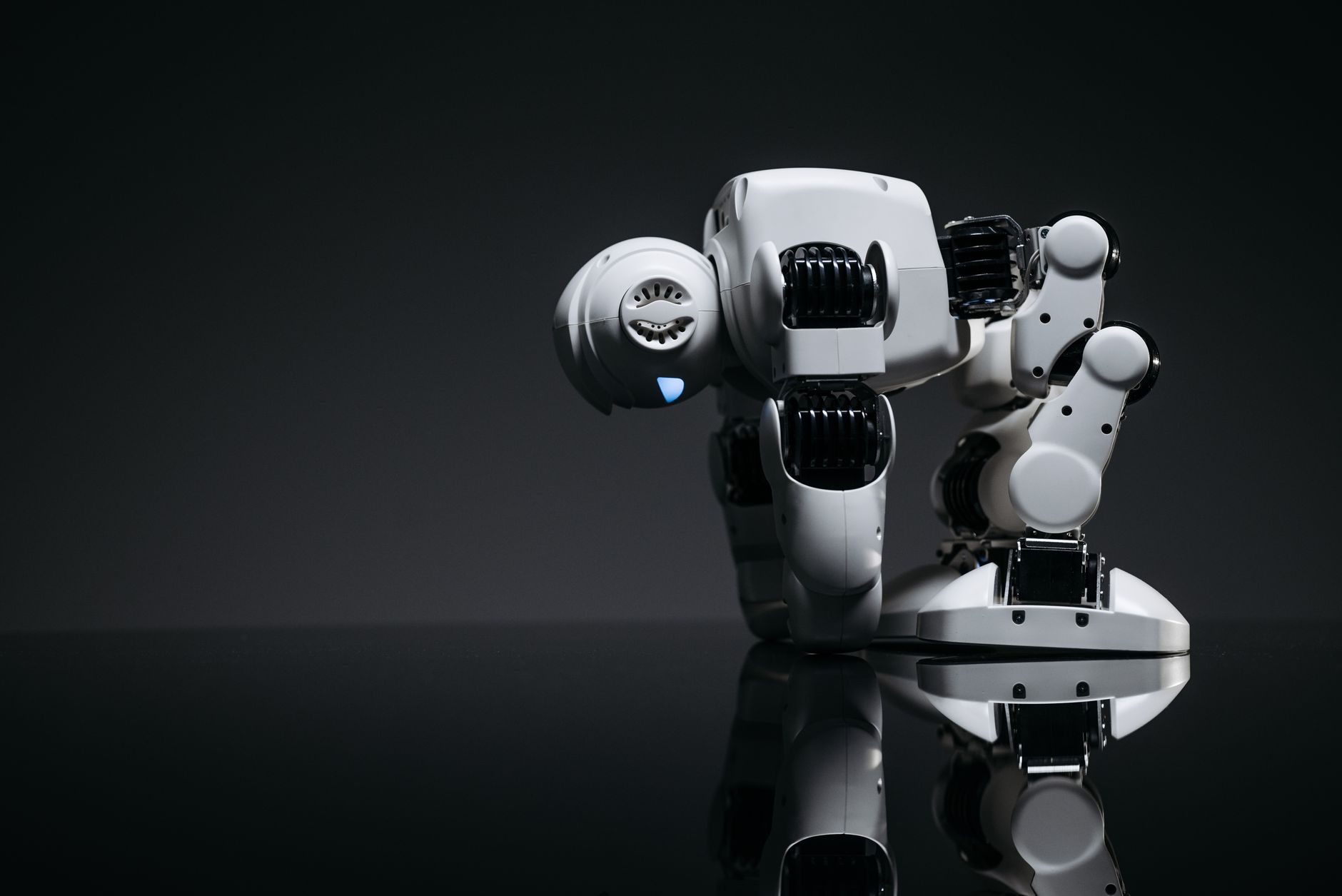
Last week the Federal Trade Commission announced a ban on foreign‑made advanced robots, covering humanoids, quadrupeds and wheeled models, citing data‑security concerns and a desire to shield U.S. firms from Chinese competition.
FTC rationale and immediate industry reaction
The agency’s order argues that imported humanoids could gather sensitive data in homes and at critical facilities, creating a national‑security risk. It also claims that domestic robotics companies need a protective buffer to build a reliable supply chain. The statement references a recent incident where a hacker seized control of 7,000 robot vacuum cleaners, highlighting the perceived threat.
Gavin Kenneally, chief executive of Ghost Robotics, welcomed the move. In an email he said, “If today’s announcement encourages stronger cybersecurity and a more level competitive environment, that’s good for customers and good for the robotics industry.” His company builds four‑legged inspection robots, and he views the ban as a step toward tighter security standards.
Impact on research and price differentials
Critics note that U.S. academic labs and start‑ups rely heavily on inexpensive Chinese platforms. Aaron Prather, director of market intelligence for the Association for Advancing Automation, observed that “90% of recent robotics research papers from U.S. universities relied on robots from Unitree, China’s top humanoid robotics company.” Unitree’s four‑leged units sell for roughly $4,600, while comparable Boston Trends models can run to $278,000.
The price gap means many researchers choose Chinese hardware for routine experiments—tasks ranging from flipping waffles to folding laundry. Removing that option could slow the pace of innovation, especially in emerging fields like humanoid manipulation where progress is still fragile.
Related: Google Adds Video Verification for Locked Accounts
Unitree is slated to go public this week, seeking a valuation near $6 billion. No U.S. firm currently matches its scale, and domestic humanoid offerings remain limited.
From a practical standpoint, the ban may force universities to allocate more budget toward higher‑priced domestic kits, potentially reducing the number of projects that can be funded each semester. That shift could ripple into the broader industry, as fewer trained graduates enter the workforce with hands‑on experience.
Broader policy context
Historically, the United States has responded to cheap Chinese imports of strategic goods—solar panels, electric vehicles, drones—by imposing tariffs or procurement restrictions. The current move extends that pattern to the AI‑adjacent robotics sector, reflecting an increasingly aggressive stance toward protecting the domestic AI ecosystem. Reports suggest the administration is also considering limits on open‑source Chinese AI models that compete with domestic services from firms like OpenAI and Anthropic, a step that could block an estimated $25 billion in annual cost savings for businesses.
While the order contains several carve‑outs that make its exact effect unclear, its symbolic weight is evident. By treating humanoid robots as a strategic component of the AI frontier, the administration signals a willingness to intervene early in a market that has yet to achieve mass adoption.


