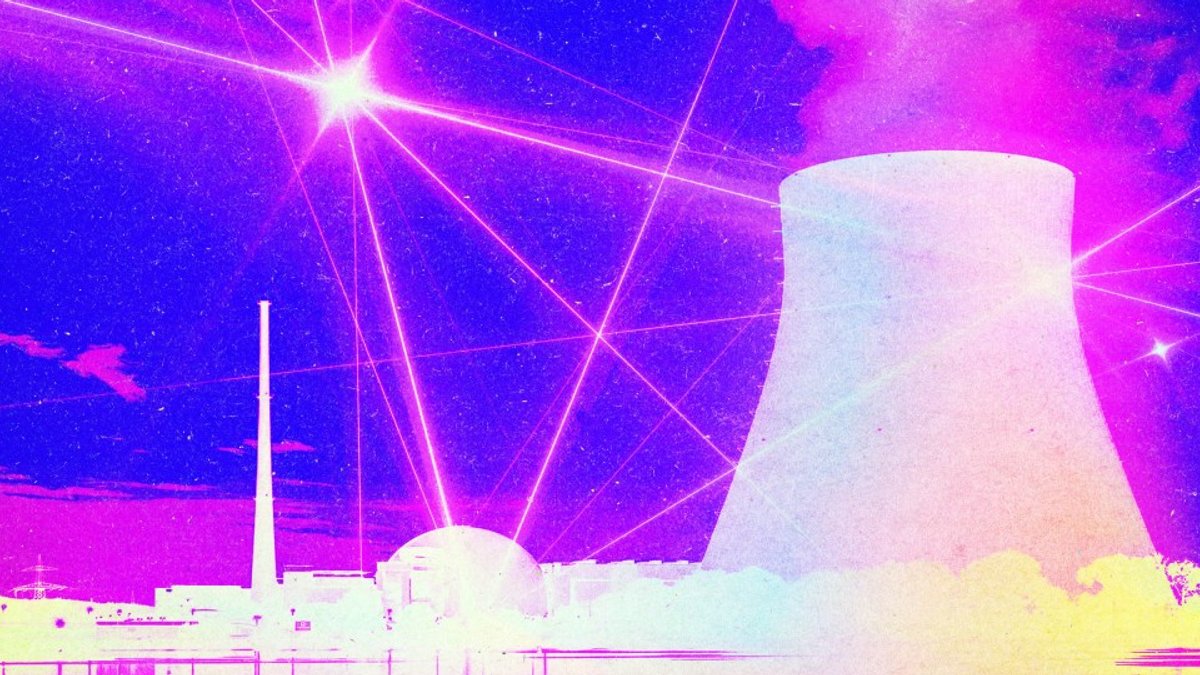
Laser enrichment could reduce the cost of uranium fuel for nuclear reactors, helping new projects meet growing demand for low-carbon energy.
How lasers separate uranium from nuclear waste
Nuclear power provides about 9% of global electricity today, and that fraction could tick up as countries look to build new reactors. New, cheaper methods to obtain fuel could help ensure that those nuclear projects stay on track.
One of those methods is called laser enrichment. It allows you to separate out the material you want (in this case, uranium) from others in a mixture of old waste.
Global Laser Enrichment, backed by GE Hitachi Nuclear Energy and Silex Systems, is about to start testing whether the technology works at commercial scale.
The concept isn’t new. The U.S. and other nations experimented with it decades ago, but technical hurdles and high expenses prevented adoption. Recent improvements in laser precision and stability have renewed interest in the approach.
Related: NASA Unveils New Telescope Amid Tech Tensions
Some experts caution that the technology could make uranium enrichment more accessible, potentially easing the path to weapons-grade material. The International Atomic Energy Agency has not yet determined whether laser enrichment would require additional safeguards.
Organ preservation breakthrough extends kidney viability
Freezing organs without damaging them has long challenged transplant medicine. Ice crystals rupture cells, rendering organs unusable. A new method has now kept pig kidneys viable for days outside the body.
One team has been able to supercool the kidneys of pigs and preserve them at −4 °C (25 °F). The kidneys survived being stored and eventually reimplanted back into pigs.
If the method proves effective in humans, it could significantly extend the window for organ transplants. Currently, kidneys must be transplanted within 24 to 36 hours. A longer preservation period would allow more time for matching donors and recipients, reducing waste and improving survival rates.
Progress in the field has accelerated in recent years. Other groups are testing machine perfusion, which keeps organs warm and functioning with oxygenated blood, and cryopreservation, which uses antifreeze proteins to block ice damage. None have reached clinical use yet, but research suggests a solution may emerge soon.
Related: Google Adds Video Verification for Locked Accounts
Scaling the technology will require regulatory approval and funding. The U.S. Food and Drug Administration has not approved any supercooling method for human trials, and hospitals would need new equipment to store and transport organs at such low temperatures.
Both advances demonstrate how small technological steps can transform industries.
Nuclear fuel enrichment hasn’t seen a major innovation in decades, while organ preservation has faced the same limitations since the 1980s. Now, both fields are testing ideas once considered impractical, showing that persistence drives progress as much as sudden breakthroughs.
For nuclear power, the implications are economic and geopolitical. A cheaper, domestic uranium supply could lessen dependence on foreign sources, particularly Russia, which still leads the enrichment market. For organ transplants, the impact is immediate: nearly 100,000 people in the U.S. alone await kidney transplants, and thousands die annually before receiving a match.
Neither technology is certain to succeed. Laser enrichment has been attempted before, only to fail due to technical or financial pressures. Organ preservation faces biological limits that even advanced methods may not overcome. Still, the shift from laboratory experiments to large-scale testing signals a move from theory to practical application.


