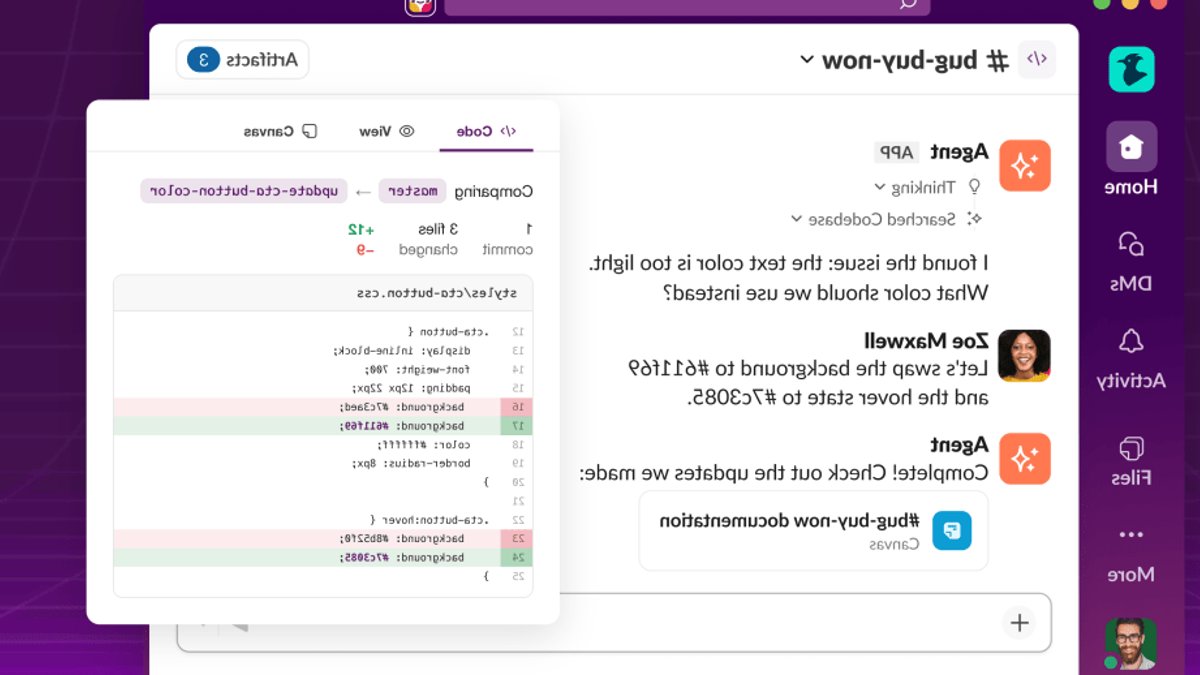
Slack has introduced “Slack Code,” a collection of shared channels that let teams work with AI coding assistants without leaving the messaging platform.
Collaborative AI coding inside a chat room
The new channels behave like ordinary Slack spaces, but mentioning a coding assistant automatically creates a dedicated channel, pulls in relevant documents, and adds the participants who need to see the work.
Team members type natural‑language prompts to the assistant, review generated code diffs, and approve changes directly in the chat. The output is saved as “session artifacts,” including code snapshots, live HTML previews and Canvas documents that visualize the result.
Related: OpenAI bolsters AI safety without storing data
When the task ends, the channel is archived automatically, keeping the workspace tidy. The approach targets short‑term efforts such as adding a feature, tweaking a web page or fixing a bug.
Security, admin controls and agent options
The platform follows its existing permission model, so an assistant can only see data that the workspace’s settings allow. Administrators may set guardrails that stop non‑technical users from pushing code without an engineering review.
Four AI assistants launch with the feature: Claude Code, Devin, GitHub Copilot and Vercel. The service will add more over time, and it is offered at no extra charge on any Slack subscription.
Admins can customize who may invoke an assistant and what level of access each participant has. Some organizations inherit user permissions based on the task, while others apply separate invoking rights, a practice that still shows growing pains.
Related: When a Child’s AI Companion Dies: Emotional Fallout, Ethical Gaps, and the Future of Robotic Therapy
Will McKeon‑White, a senior analyst, notes that permission handling remains “a persistent challenge for anything multiplayer.” He also points out that current multi‑assistant collaborations are limited, and that more dynamic cooperation could produce unexpected results, referencing recent Anthropic research.
While the rollout is early, some firms already treat the capability as a competitive edge. Others may wait to see how the guardrails hold up under real‑world pressure.
Wayne Kurtzman of IDC says the addition “closes the gap between where work gets done and where code gets written,” aligning with Slack’s broader goal of a seamless, multiplayer workspace.


